Chalk Cliffs Rügen
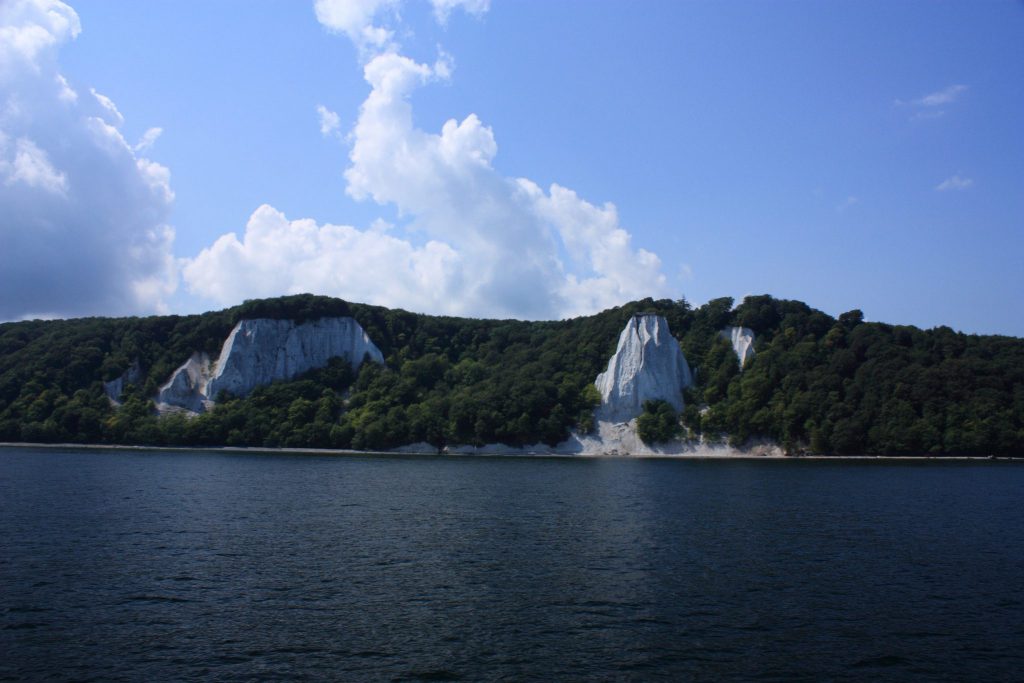
The chalk cliffs of Rügen, located near the village of Sassnitz within Jasmund National Park, are among only five sites in Europe where chalk cliffs of this scale can be found. The brilliantly white cliffs rising along the Jasmund peninsula are one of Rügen's most iconic natural features. From sea level, they soar upward to heights of between 20 and 100 metres, creating a truly breathtaking landscape. The contrast is extraordinary: deep blue water, dense green beech forests, and gleaming white cliffs combine to form one of Germany's most striking natural scenes.
The total chalk cliff coastline stretches approximately 15 kilometres and is best admired from the water. It is also possible to explore on foot, walking along the base of the cliffs across the rocky shoreline to take in their sheer scale up close. This trail runs from Sassnitz to the Stubbenkammer area and follows the cliff edge throughout. However, this walk is not recommended in wet weather, as mud, clay, and chalk stone can make the path extremely slippery.
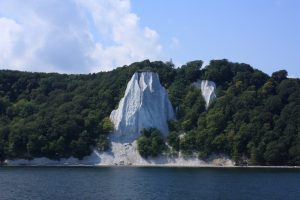
The highlight of the chalk cliff coastline is the Königsstuhl - the highest point along the shore at 118 metres - which is particularly impressive when viewed from the sea. The cliffs are constantly subject to intense erosion: with every heavy rainfall, chunks of rock break away and fall, and every major storm at sea claims another section of the coastline. This erosion appears to have accelerated in recent years, as evidenced by the large number of fossils that can now be found at the base of the cliffs. For more information about the national park, please visit this page.
The chalk cliffs have long been a beloved subject for artists. The Romantic painter Caspar David Friedrich was particularly drawn to them, and copies of his iconic paintings featuring the cliffs can be found throughout the region.
Practical information
- Address
- Nationalpark-Zentrum Königsstuhl, Stubbenkammer 2, 18546 Sassnitz
- Opening hours
- Open daily (except December 24). During peak season from 09:00 AM.
- Price
- Adults (15+) €14, children aged 6-14 €8, up to 5 years free, family ticket €30. Includes Skywalk and experience exhibition.
- Visit duration
- 2 to 3 hours (visitor centre, Skywalk and walk)
- Best time
- Early morning or outside peak season. From the sea, the light is most beautiful in the afternoon.
- Phone
- +49 38392 661766
- Website
- www.koenigsstuhl.com
Location on Rügen
Photos
Frequently asked questions
How much does a visit to the Königsstuhl cost?
A ticket for the Nationalpark-Zentrum Königsstuhl costs €14 for adults, €8 for children aged 6 to 14, and is free for children up to 5 years old. A family ticket (2 adults plus children up to 14 years) costs €30. Access to the Skywalk and the experience exhibition is included in the price.
Do you have to pay to see the chalk cliffs?
The coastal walking paths and the beach at the foot of the cliffs are freely accessible. Only the Skywalk at the Königsstuhl and the visitor centre require a ticket. A free alternative with a stunning view of the Königsstuhl is the neighbouring viewpoint Viktoriasicht.
How do you get to the chalk cliffs of Rügen?
By car, drive to the car park near Hagen. From there it is approximately a 20-minute walk to the Königsstuhl, or you can take the shuttle bus. The last few kilometres are traffic-free. A scenic alternative is the coastal walk from Sassnitz along the edge of the chalk cliffs.
When is the best time to visit the chalk cliffs?
Early in the morning or outside the summer holiday season it is at its quietest. If you want to photograph the white cliff faces from the water, a boat trip in the afternoon is ideal, as the sun shines directly onto the coastline at that time of day.
Tickets & tours
Book the best activities, tours and tickets in advance.