Störtebeker Festspiele
The Störtebeker Festival takes place every year from late June to early September. It has been organized since 1993 and is held on the shores of the Jasmund Bodden near the village of Rasewiek on Rügen. It is Germany's most successful open-air theatre festival. Just how popular the festival is becomes clear from the fact that the four-millionth visitor was welcomed in 2007 and the five-millionth in 2009. On average, the various performances staged during the festival are attended by around 4,600 people each.
The History of the Störtebeker Festspiele
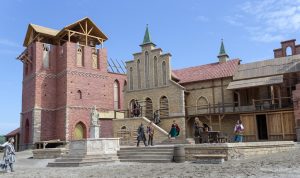 During the GDR era, the natural stage where performances are still held to this day was constructed in 1959. The very first production staged was the dramatic ballad "Karl Störtebeker," and it is from this that the modern-day festival takes its name. This historical production was performed from 1959 to 1961 and again during the summers of 1980 and 1981. Around 1,000 people were involved in its creation, and the five performances attracted a combined total of 670,000 visitors. Since the revived productions began in 1993, many actors and directors have contributed to the festival. The performances tell the life story of the legendary pirate Karl Störtebeker and his companions in instalments. The complete story unfolds over successive years, meaning that if you want to follow the entire life story of Karl Störtebeker, you will need to visit Rügen during the festival each year. The current storytelling cycle began in 2012.
Still a Hugely Popular Festival
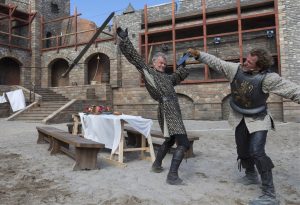 The Störtebeker Festival remains enormously popular to this day. Since the first performances in 1993, only 2006 saw a noticeable decline in visitor numbers. This was attributed to poor weather conditions and the economic downturn that was beginning to make itself felt across Germany - and on Rügen - at the time. The festival receives no public subsidies and is entirely dependent on ticket revenue and the contributions of sponsors.
Practical information
- Address
- Naturbühne Ralswiek, 18528 Ralswiek
- Opening hours
- Performance season 20 June to 5 September 2026, Monday to Saturday at 8:00 PM (until approximately 10:30 PM, with an interval).
- Price
- Ticket prices vary by category; book in advance via the official website or the ticket hotline.
- Visit duration
- Show approximately 2.5 hours including interval
- Best time
- A clear summer evening. Bring a jacket - it gets cool by the water.
- Phone
- +49 38838 31100
- Website
- www.stoertebeker.de
Location on Rügen
Frequently asked questions
What are the Störtebeker Festspiele about?
It is a spectacular open-air show about the legendary pirate Klaus Störtebeker, featuring more than 150 performers, horses, real ships, stunts and special effects. The 2026 production is called Likedeeler.
When do the performances take place?
In 2026 the festival runs from 20 June to 5 September, Monday to Saturday at 8:00 PM. Each performance lasts approximately 2.5 hours including the interval.
Where does it take place?
At the open-air theatre in Ralswiek - a natural amphitheatre dating from 1959 on the shores of the Großer Jasmunder Bodden, beneath Ralswiek Castle.
How do I get tickets?
It is best to book tickets in advance via the official website stoertebeker.de or through the ticket hotline. Popular evenings sell out quickly.
Nearby
Tickets & tours
Book the best activities, tours and tickets in advance.