Zudar
Foto: Pixelteufel (CC BY 2.0), via Wikimedia Commons
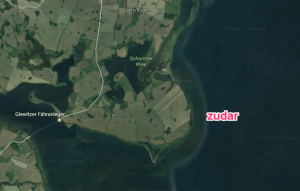
Zudar is a peninsula of approximately 18 square kilometres that forms part of the island of Rügen. Until 2004, Zudar was an independent municipality. Since June 2004, it has been part of the municipality of Garz. Zudar itself consists of eight smaller settlements. The noted gynaecologist Max Hofmeier, who later became a lecturer at the University of Würzburg, was born on the peninsula of Zudar.
Sights in Zudar
 When you visit Zudar, you can explore typical farm labourers' cottages dating from the 1960s. The St. Laurentius Church is also well worth a visit. This church dates from the 14th century and was a well-known place of pilgrimage until 1370, as it housed a statue of the Virgin Mary that drew pilgrims from far and wide. However, when a ship carrying pilgrims sank in 1372, these pilgrimages came to an end. Thanks to various renovations and repairs carried out in the 20th century, the church remains in excellent condition. The birthplace of Ernst Moritz Arndt - a celebrated German writer, historian and freedom fighter who lived from 1769 to 1860 - can also be visited as a point of interest. The natural landscapes of the peninsula are equally rewarding, as is the case throughout Rügen as a whole. Visitors who make their way to Zudar during a stay on Rügen are drawn by the beautiful views over the water and the peace and unspoilt beauty of the surrounding nature.
Location and connection of Zudar to Rügen
The narrowest point of Zudar is 900 metres wide. The highest point on the peninsula lies 25 metres above sea level. The southernmost tip of the island of Rügen is also located on the Zudar peninsula, at a place known as the Palmer. Zudar plays an important role in connecting the island of Rügen to the German mainland. Alongside the fixed road link, the ferry connection between Zudar and the mainland town of Stahlbrode is the most important transport link in the area.
Practical information
- Visit duration
- Half day
- Best time
- Spring and summer for cycling and nature.
Location on Rügen
Frequently asked questions
Where is Zudar located?
Zudar is the southernmost peninsula of Rügen, a rural and peaceful area far away from the crowds.
What makes Zudar special?
The tranquility, the open landscape, the historic church of Groß Zicker, and the rich birdlife along the bodden.
What can you do on Zudar?
Cycling and hiking through the wide-open landscape, birdwatching, and enjoying the silence.
Nearby
Tickets & tours
Book the best activities, tours and tickets in advance.